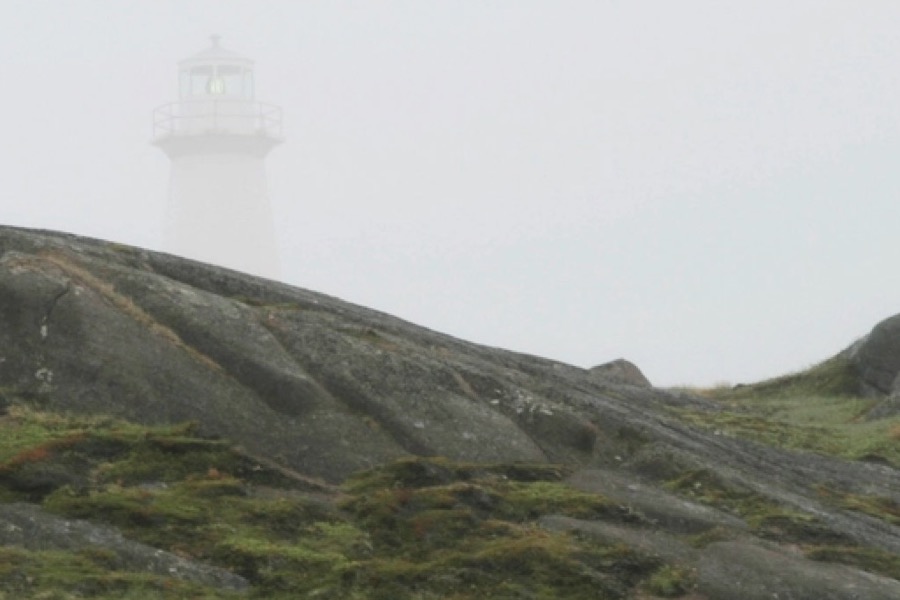
The winter my father lost the hearing in one ear, I became the keeper of the Wray Light in everything but name.
Nobody wrote it down. The Board of Lights sent its inspector each spring, a man with a clipped grey moustache and a way of running his glove along the brass as if he expected it to lie to him, and each spring my father met him at the foot of the tower with his good ear turned forward and answered every question himself. The inspector signed the log. The inspector drank his tea. The inspector took the noon boat back to Carrow Point, and I went up the hundred and twelve steps to trim the wicks, because by then my father could not hear the clockwork falter and I could.
I was fourteen. I knew the tide tables the way other girls knew hymns.
It was in the February of that year — the year of the great tide, though of course we did not know to call it that yet — that I found the almanac.
It had come in with the wrack after a three-day blow: a flat parcel wrapped in oilcloth and tied with tarred twine, lodged between two rocks below the landing stage as neatly as if someone had placed it there. The oilcloth had done its work. When I cut the twine in the kitchen, with my father asleep in his chair and the lamp turned low to save the paraffin, the book inside was barely damp.
Tide Tables for the Harrow Coast, the cover said, in gold that had mostly flaked away. With Remarks on Weather, Moon and Sea.
I had seen almanacs before. The harbour master kept a shelf of them, one for every year back to his grandfather’s time, and he let me read them on market days when my father sent me in for oil. This one was the same size, the same dull green, the same thin pages printed in two columns. High water, low water, heights in feet and inches. Sunrise and sunset. The phases of the moon drawn as small black circles filling and emptying down the margin.
It was only when I turned to the title page that I put it down on the table and moved my hand away from it, the way you would from a stove.
The year printed there was next year.
* * *
I told myself it was a printer’s error. I told myself someone in a town far down the coast had ordered their almanacs early, and a crate had gone over the side of a coaster, and this was one copy of many, drifting. That was a sensible story. I liked it. I made myself a cup of tea to go with it.
Then I checked the tables for that week against my father’s, and they matched to the minute. And then — because I was fourteen, and alone, and because the wind had dropped and the kitchen was so quiet I could hear the clock in the lamp room four floors above — I turned to the back of the book, to the page where the harbour master’s almanacs printed their Remarks.
Most years the Remarks were dull. Spring tides expected to run higher than usual in the third week of March. Mariners are advised. That sort of thing.
The Remarks in this book were written in the same small, careful type as everything else. But they were not dull.
On the night of the fourth of November, the book said, a tide will come that is not in any table. The Saltings will go under, and the lower town, and the church of St Brannoc to its weathercock. Those who are warned will not believe it. The keeper’s daughter must.
I read it three times. I read it until the words stopped being words and became a pattern of marks on paper, and then became words again, worse than before.
Outside, the beam went round and round above me, the way it had every night of my life, laying its long white arm across the water and taking it back. Twelve seconds. I counted them without meaning to. I have always counted them.
Twelve seconds, and the light comes back. That was the only promise the sea had ever made me, and I had believed it all my life.
I closed the book and put it under my mattress, and I did not sleep.